Archives for category: Uncategorized

Normally when I see videos like the one in the link below, I am impressed but quickly feel a pang of cynicism.  Usually that cynicism stems from the thought that people spend so much time and energy on activities that are so pointless.  In seeking entertainment, time is wasted, useful items are destroyed and culture shifts even further towards the exaltation of the inconsequential.  This video made me feel the same.  Questions abound.  Do they recover those skis?  How much time and energy did they devote to figuring this out?  How do people just fly over to Norway to jump off cliffs?  Don’t people die doing this?

Those nagging internal voices were pretty much squashed, however, by the sheer awesome spectacle of humans flying around as if they belonged to the sky. It’s literally breathtaking.

Buzzing the walls [via]

I love New Year’s Day.  They always turn out to be pleasant and life-affirming days.  There’s no pressure to go to parties or avoid drunk drivers.  One nurses a gentle hangover with gentle, entertaining activities; watching movies, a nice walk, brunch.  I made myself some breakfast at the house and then went into the City for coffee.  I met up with LL and we sat outside, bundled up against the cold, at Reverie.  Then we went for a good walk at Ocean Beach which was neither too cold nor foggy.  The sun was setting, the sand was dight with pretty pebbles and half-crushed sand dollars.  There was a boat that was mysteriously washed up on shore.  The cushions had all been pulled out of the cabin and the sails were gone, yet some personal property remained inside.  I haven’t found any note of it on the news or interwebs yet.  LL and I sat for a good while on a driftwood log watching the twilight.  I pointed out Venus, which was the only “star” we could see, shining brightly below the crescent moon.  We capped off the day later with a huge bowl of Tom Ka and some curry noodles from the Citrus Club – a delicious comfort on a chilly night.

There was something very soothing about watching the grand expanse of Nature rolling on oblivious to our petty human calendars.  Then, today, I saw this video which is beautiful and conveys that same feeling.

The Sky in Motion

(This should be the “HD” version.  Be sure to scale it to full-screen.)

Happy 2009!

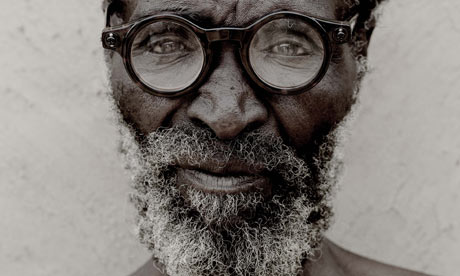
Adaptive Eyewear is a nonprofit organization that distributes eyeglasses with prescriptions that the wearers can set themselves.  The glasses, designed by Oxford University Professor Joshua Silver, have lenses made of oil-filled bladders that are adjustable with a syringe.  The user adjusts the amount of oil in each lens to the point where it helps the most, and then the glasses are ready for use.  You can read more about the technical aspects of the glasses  here.

The wonderful potential for these glasses lies in the fact that they can be deployed in areas without eye doctors.  The organization’s founder hopes to reach 1 billion of the world’s poorest people, who so often lack access to medical care of any kind, with his invention.  Removing impairments to vision can help people be more productive and perform better in schools, critical components for breaking the cycle of poverty.  The Harry Potter aesthetic of the glasses is an unintentional bonus.

A.E. is already distributing the glasses through various channels, from humanitarian donations to sales in pharmacies.   They are working hard to achieve the scale that they will need to reach all of those in need.  Their partnership with the Ghana Social Marketing Foundation brings the possibilities and advantages of social enterprise to the endeavor.

It seems to me that a partnership with VisionSpring, which has been in the business of eyeglass distribution for a while now, would be a logical next step.  VisionSpring provides eyeglasses for Freedom from Hunger’s Healthkeepers program in Ghana which reaches underserved rural populations with critical health products by training local women to be ambulatory vendors.  The women vendors benefit from having a job and the remote rural population benefits from increased access to life-saving products like mosquito nets and oral rehydration salts.  Adding the Adaptive Eyewear glasses to the Healthkeepers (quite literal) baskets would be yet another benefit of the program.  The Healthkeepers model is one that can be expanded and replicated to cover many more areas and countries where people are suffering simply because they don’t have access to health or well-being products.

My New Year’s wish will be for the success of Adaptive Eyewear’s ambitious project.

California’s Attorney General Jerry Brown has asked the Supreme Court to overturn Proposition 8. His argument is that it is unconstitutional because of the equal rights provision.  It’s an interesting tack for him to take because it negates the need to talk about homosexuality, the sanctity of marriage, or anything that might be considered controversial.  It’s also interesting because Mr. Brown has said that he will uphold the will of the people – a position that disheartened opponents of Prop. 8.  This new challenge to Prop. 8 maybe Mr. Brown’s way of building up support among his base before a gubernatorial run.

Regardless of the motivations, let’s hope that the argument against Proposition 8 is successful.  After all, as the sign on my friend’s house supporting gay marriage said, “we all have the right to be equally miserable.”

National Geographic has an excellent article online called “Necessary Angels” about a program in India called Jamkhed that is training community health workers. The health workers live in villages where there is little or no other medical care available. They focus on preventative treatment since the great portion of maladies that afflict the poor in these villages are preventable. Interestingly, the article explores the opinion of several people who say that doctors are not the answer because they earn their money off treating, rather than preventing, disease.

Furthermore, this indigenous program, which was started by Raj and Mabelle Arole, has taken on a radical social change experiment. The village health workers that are trained are all members of the “untouchable” caste. The caste system is officially banned in India, but continues to thrive in rural villages. By placing “untouchables” in positions of authority, Jamkhed has turned the social paradigm on its head. The women from the “untouchable” caste gain confidence and the demonstration of their efficacy breaks down the superstitious and stupid social mores.

There’s an interesting point made about the growth of this program. In 38 years of existence, they have trained health workers in 300 villages. That figure shocked me because of how few villages they have reached in such a long time. Contrast that with a program like BRAC, which is mentioned in the article and has been around for a similar amount of time. BRAC has set up “essentially a substitute for a government health care system, with 70,000 village health workers in 70,000 villages.” The response from Jamkhed as to why it has not scaled up is that they have expanded to include other services beyond health. That argument simply does not hold water in the face of BRAC’s success at providing health care, education, housing and financial services. It sounds to me like Jamkhed is lacking either the will from management or a sustainable model to allow them to scale.

Accompanying the article there is, as you would expect from National Geographic, a wonderful photo gallery as well as other supplementary material.